Management

Powers and Duties

The Authority is, in common with all other IFCAs, is regulating body and has powers under the Marine and Coastal Access Act 2009 to make byelaws to be observed within its District.   In addition to enforcing its own byelaws the Authority also enforces national and certain EU legislation relating to Sea Fisheries within its District.  The Authority is also responsible for The Thames Estuary Cockle Fishery Order 1994 and the River Roach Oyster Fishery Order 1992.


Whilst fisheries management for many stocks within the Kent & Essex IFCA District is delivered at a stock level and at an international level i.e. through the European Union’s Common Fisheries Policy, the local management measures in place for many inshore fisheries significantly augment these national measures and protect inshore stocks and, in so doing they secure access to fisheries for the coastal communities of Kent & Essex and beyond. 


Developing Management Plans

In accordance with our guidance and our annual IFCA plan we will set about applying, with thorough engagement with the coastal community, a management plan framework to the major fisheries off the coasts of Kent and Essex. We hope to use a similar fisheries management assessment to that undertaken by Sussex IFCA (Navigating the Future) and hope by working with our partners that this project will identify the current barriers (for example; knowledge gaps, ineffective management) preventing Marine Stewardship Council (MSC) certification of the fisheries.  The inventory of gaps will then be used to formulate research questions; which will be developed into a management plan for each IFCA district. Undertaking this analysis will also help identify to K&EIFCA areas where local management could be progressed and help deliver several key strategic outputs (e.g. evaluating current byelaws, providing key information for risk-based enforcement framework, and helping to create species specific management plans).

Fisheries Enforcement

K&EIFCA is responsible for the enforcement of legislation relating to the protection of sea fisheries resources throughout its district, and works with other key bodies such as Natural England, the Environment Agency and the Marine Management Organisation to do so.


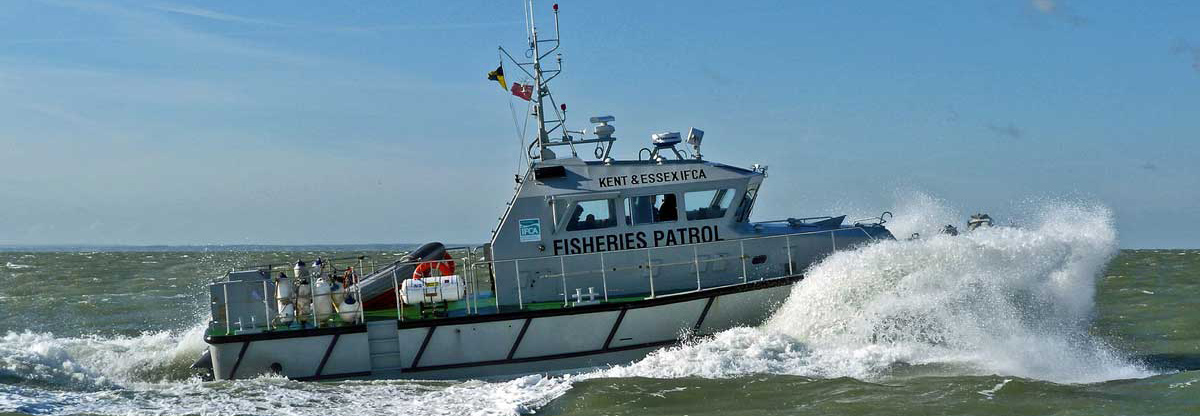
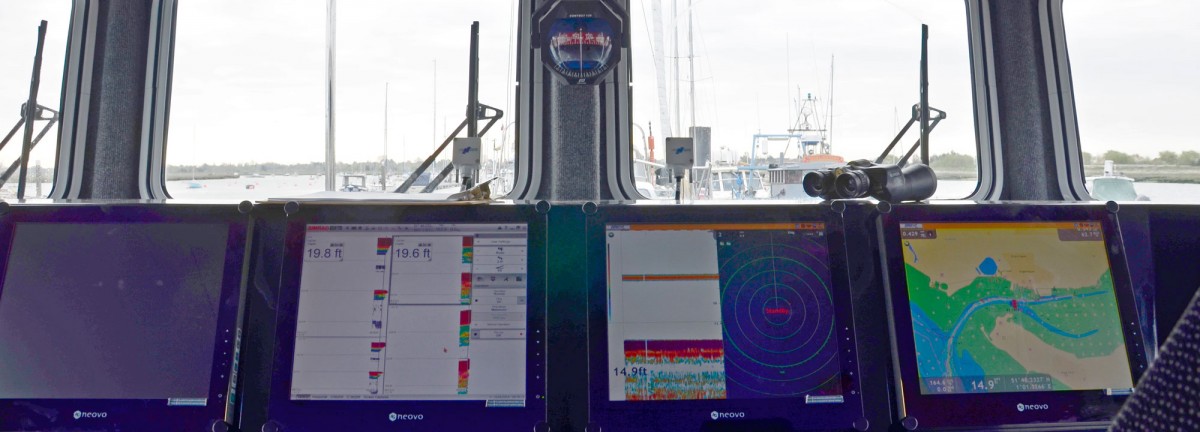
Kent & Essex IFCA’s  7 warranted Fishery and Conservation (IFC) officers enforce legislation throughout the district and inspections take place both at sea and on shore, day and night.  To enable inspections at sea, the Committee owns two vessels (based at Ramsgate and Brightlingsea) which are specifically designed to and carry RIBs to facilitate safe boarding of vessels at sea.


Marine Protected Areas

There are currently four types of marine protected areas designated in our district and K&EIFCA works with other regulators to manage these areas.

• Special Areas of Conservation (SACs) - Protect marine habitats or species of European importance
• Special Protection Areas (SPAs) - Protects populations of specific species of birds of European importance.
• RAMSAR sites - Protect internationally important sites for wetland birds
• Sites of Special Scientific Interest (SSSI)


The Marine and Coastal Access Act 2009 created a duty to designate new areas of national importance as Marine Conservation Zones (MCZ’s), which will combine with the marine protected areas already designated to form an ecologically coherent network.

Research

K&EIFCA conducts stock assessments, fisheries research and environmental monitoring to obtain the key information required to inform management of the district's sea fisheries resources. This enables the Authority to base its management of the sea fisheries resources on sound transparent scientific evidence.


K&EIFCA looks to continue, undertaking regular cockle surveys in the Thames and carrying out key research projects (e.g management of seed mussel fishery, lobster v-notching and mitigation measures for the fishing industry of wind farm impacts); and hopes to work in partnership with all its stakeholders to share the best available marine data and build on best practice.

Parternship Working

Working in partnership: Section 174 of the Marine and Coastal Access Act (2009) places a duty on an IFCA to cooperate with its neighbouring IFCAs and other public authorities that are involved with regulation or enforcement in the sea within its District.